
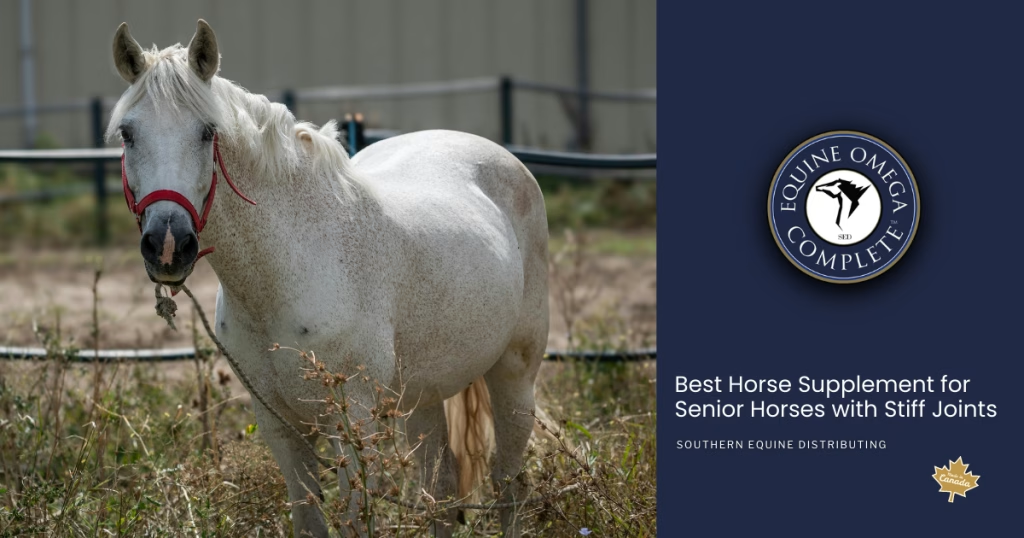
The best all-in-one supplement for senior horses with stiff joints is a daily liquid formula combining omega-3 fatty acids and high-grade vitamin E, nutrients that work together to reduce joint inflammation, slow cartilage breakdown, and restore mobility in aging horses.
As horses age past 15, natural nutrient deficiencies accelerate joint degeneration faster than diet alone can compensate. Here’s what the research shows, what ingredients to look for, and which formulations deliver results.
What Is an All-in-One Horse Joint Supplement?
An all-in-one horse joint supplement is a single daily product that simultaneously addresses multiple root causes of stiffness in senior horses, specifically inflammation, cartilage degradation, and omega fatty acid deficiency, rather than requiring owners to stack multiple products. The most effective formulas combine omega-3s (EPA and DHA), vitamin E, and natural anti-inflammatory compounds in a bioavailable liquid format that the horse’s digestive system can absorb quickly.
The distinction matters because senior horses with stiff joints typically face several compounding issues at once. A joint supplement that targets only one pathway, such as glucosamine alone, may produce limited results when the underlying problem is systemic inflammation driven by omega-3 deficiency.
Quick Summary
- Senior horses over 15 are highly likely to have omega-3 deficiency. Hay-based winter diets provide almost no EPA or DHA, the anti-inflammatory omega-3s that protect joint tissue.
- Omega-3 and vitamin E work together for joint protection. Omega-3s reduce inflammation at the cellular level while vitamin E prevents oxidative damage to cartilage and synovial fluid.
- Liquid supplements absorb significantly faster than pellets or powders. Bioavailability from liquid omega sources is up to 3× higher than encapsulated alternatives for horses.
- University of Guelph research confirms omega-3 supplementation prevents cartilage damage from long-term wear and tear, a critical concern for horses with years of work behind them.
- Results from all-in-one joint supplements typically appear within 4–8 weeks. Owners commonly report visible improvements in movement, attitude at work, and ease of tacking up.
Why Senior Horses Develop Stiff Joints
Joint stiffness in senior horses is rarely caused by a single factor. It results from a cascade of changes that accelerate after age 15 and compound over time.
1. Omega-3 Deficiency in Hay-Based Diets
Fresh pasture grass contains notable levels of alpha-linolenic acid (ALA), the plant-based precursor to omega-3 fatty acids. Hay loses the majority of its omega-3 content during the drying and storage process, meaning horses on hay-dominant diets, especially in Canadian winters, are chronically deficient in anti-inflammatory fatty acids. Without adequate omega-3s, the body defaults to pro-inflammatory omega-6 pathways, accelerating joint inflammation.
2. Declining Cartilage Repair Capacity
Articular cartilage, the smooth tissue that cushions joints, has almost no blood supply and regenerates poorly after damage. Senior horses that have carried riders, pulled loads, or competed for many years accumulate micro-damage that the body increasingly struggles to repair. Research from the University of Guelph found that supplementation with omega fatty acids helps prevent further cartilage damage from long-term wear and tear, making early and consistent supplementation critical.
3. Oxidative Stress and Vitamin E Depletion
Exercise and cellular metabolism produce free radicals that damage joint tissues. Vitamin E is the primary fat-soluble antioxidant that neutralizes these free radicals in joint cartilage and synovial fluid. Senior horses, particularly those on hay rather than fresh pasture, frequently test below optimal vitamin E levels, leaving joints more vulnerable to oxidative degradation.
How the Best Joint Supplements Work
Understanding the mechanism helps owners evaluate whether a product will actually address their horse’s stiffness.
Step 1: Reduce Systemic Inflammation with Omega-3 Fatty Acids
Omega-3 fatty acids (EPA and DHA) compete with omega-6 fatty acids for the same enzymatic pathways that produce either pro-inflammatory or anti-inflammatory prostaglandins. When horses receive adequate omega-3s daily, the inflammatory response in joint tissue is modulated at the cellular level, reducing swelling, heat, and pain in affected joints without pharmaceutical side effects.
Step 2: Protect Cartilage from Further Degradation
Omega-3s also inhibit matrix metalloproteinases (MMPs), enzymes that break down cartilage collagen when chronically elevated. By reducing MMP activity, consistent omega-3 supplementation slows the rate of cartilage loss in horses with existing joint damage and helps preserve structural integrity in joints not yet affected.
Step 3: Neutralize Oxidative Damage with High-Grade Vitamin E
Natural-source vitamin E (d-alpha-tocopherol) is absorbed at roughly 2× the rate of synthetic vitamin E (dl-alpha-tocopherol). In joint tissue, vitamin E stabilizes cell membranes, protects synovial fluid quality, and supports the immune environment that governs how joints respond to inflammation. High-grade vitamin E paired with omega-3 fatty acids provides complementary protection across both inflammatory and oxidative pathways.
Step 4: Deliver Nutrients in Bioavailable Liquid Form
Liquid supplements bypass the limitation of powder or pellet formulas, which depend on the horse’s digestive system breaking down a solid matrix before absorption begins. Liquid omega fatty acids are immediately available for absorption in the small intestine, producing faster and more consistent blood levels, particularly important for senior horses with variable digestive efficiency.
Comparing Joint Supplement Types for Senior Horses
Not all joint supplements are created equal. The table below compares the five main categories on the metrics that matter most for senior horses with chronic stiffness.
| Supplement Type | Key Ingredients | Bioavailability | Targets Inflammation | Best For |
| Liquid omega-3 + vitamin E | EPA, DHA, d-alpha-tocopherol | High (immediate absorption) | Yes, at cellular level | Senior horses with chronic stiffness and omega-3 deficiency |
| Glucosamine + MSM powder | Glucosamine HCl, methylsulfonylmethane | Moderate | Indirect only | Mild joint support, younger horses |
| Pelletized joint formula | Glucosamine, chondroitin, hyaluronic acid | Moderate to low | No | Horses that resist liquid supplements |
| Injectable HA (veterinary) | Hyaluronic acid | Very high (intra-articular) | Limited | Specific joint conditions under veterinary management |
| Herbal anti-inflammatory | Devil’s claw, turmeric | Variable | Partial | Mild stiffness, competition-restricted horses |
Liquid Omega-3 + Vitamin E Formulas
What They Are: Daily liquid supplements combining omega-3 fatty acids with natural-source vitamin E to address the two primary biological drivers of joint stiffness in senior horses, inflammation and oxidative damage.
Strengths: High bioavailability, dual-pathway protection, systemic benefits (coat, respiratory, gastric health) beyond joints.
Best For: Senior horses over 15 with generalized stiffness, horses on hay-based diets, and horses where owners want a single daily supplement covering multiple health needs.
Glucosamine + MSM Powders
What They Are: Powdered formulas providing structural building blocks for cartilage (glucosamine) and a natural sulfur compound (MSM) that may reduce inflammation.
Weaknesses: Limited bioavailability in horses compared to liquid formulas; do not address omega-3 deficiency or vitamin E depletion.
Best For: Younger horses with mild joint concerns or as an add-on to a liquid omega-3 program.
Pelletized Joint Formulas
What They Are: Compressed pellets or powders containing glucosamine, chondroitin, and sometimes hyaluronic acid.
Weaknesses: Lower bioavailability due to digestive processing; do not correct omega-3 deficiency; results take longer to appear.
Best For: Horses with specific structural joint concerns under veterinary guidance, or as part of a multi-supplement program.
Common Mistakes Senior Horse Owners Make with Joint Supplements
The single-ingredient trap is the most expensive mistake in senior horse joint care, and the most common.
Many owners see a horse stiffening and reach for the most familiar product on the shelf: a glucosamine supplement. While glucosamine supports cartilage structure, it does not address the omega-3 deficiency driving chronic inflammation, nor does it replace depleted vitamin E protecting joint tissue from oxidative damage. Months pass, the horse shows modest improvement or none, and the owner concludes supplements simply don’t work, when in fact they chose a product that addressed only one part of a multi-factor problem.
1. Treating Stiffness Without Testing for Omega-3 Deficiency
Horses on hay-dominant diets, which describes most horses in Canada for at least six months of the year, are almost universally deficient in EPA and DHA. Before investing in any supplement program, owners should consult their veterinarian about omega fatty acid status, particularly if the horse is not on fresh pasture year-round.
2. Choosing Synthetic Vitamin E Over Natural-Source Formulas
Synthetic vitamin E (dl-alpha-tocopherol) is cheaper to produce and appears in many supplement formulas. However, research consistently shows natural-source vitamin E (d-alpha-tocopherol) is absorbed at roughly twice the rate. For senior horses with elevated oxidative stress, this difference in bioavailability translates directly to how much protection joint tissues receive.
3. Expecting Results in Under Four Weeks
Joint inflammation and cartilage protection operate on biological timescales of weeks, not days. Omega-3 incorporation into cell membranes requires consistent daily supplementation for 3–6 weeks before anti-inflammatory effects peak. Owners who stop supplementing after two weeks of modest results miss the window where most horses show meaningful improvement in mobility and comfort.
How to Choose the Right All-in-One Supplement for Your Senior Horse
Framework: The Three-Pathway Coverage Test
Evaluate any joint supplement against three biological pathways before purchasing. If a product doesn’t address all three, it’s not truly an all-in-one solution for senior horses with stiff joints.
Step 1: Confirm Anti-Inflammatory Coverage
Look for omega-3 fatty acids (EPA, DHA, or ALA from flaxseed) listed as primary ingredients, not trace additions. Effective daily doses for horses typically range from 15–30 mL of a high-concentration liquid omega formula. Products where omega-3s are buried in a long ingredient list below fillers are unlikely to deliver therapeutic benefit.
Step 2: Confirm Antioxidant Coverage
Check for natural-source vitamin E (d-alpha-tocopherol) specifically, not mixed tocopherols or dl-alpha-tocopherol. Effective supplemental vitamin E for horses with deficiency typically falls in the range of 1,000–3,000 IU per day depending on body weight and work level. A formula that combines vitamin E directly with omega-3 fatty acids benefits from the fact that fat-soluble vitamins absorb best when taken with dietary fat.
Step 3: Confirm Bioavailability Through Liquid Delivery
Liquid formulas consistently outperform powders and pellets for omega fatty acid delivery in horses. If a product is only available in powder or pellet form, verify that independent research supports its bioavailability in equines, not just in humans or other species where research is more plentiful.
Framework: The Science Verification Check
Before purchasing any supplement, verify that efficacy claims are supported by peer-reviewed research in horses, not just anecdotal testimonials or studies conducted in other species. The gold standard is university-conducted research published in equine science journals. Studies conducted by the University of Guelph specifically examined how omega fatty acid supplementation affects gastric ulcer healing and cartilage protection in horses, providing direct evidence applicable to Canadian horses on typical hay-based diets.
Equine Omega Complete®: An All-in-One Solution for Senior Horses
Equine Omega Complete® is a daily liquid supplement combining omega-3 and omega-6 fatty acids with high-grade natural vitamin E, formulated specifically for equine health and validated by University of Guelph research studies. It is Canada’s exclusive premium liquid omega supplement for horses, available through Southern Equine Distributing.
| Feature | Equine Omega Complete® |
| Format | Liquid (high bioavailability) |
| Key Ingredients | Omega-3, Omega-6 fatty acids + high-grade vitamin E |
| Research Backing | University of Guelph peer-reviewed studies |
| Joint Action | Anti-inflammatory + cartilage damage prevention |
| Additional Benefits | Gastric ulcer support, coat and respiratory health |
| Availability | Canada: Southern Equine Distributing retail network |
University of Guelph studies on Equine Omega Complete® demonstrated that omega fatty acid supplementation both aids in healing gastric ulcers and prevents cartilage damage from long-term wear and tear, two of the most common concurrent conditions in senior horses that have been in regular work. For horse owners seeking a single product that addresses joint stiffness, digestive health, and coat condition simultaneously, this combination of research-backed ingredients in a liquid format addresses the three-pathway coverage requirement.
Available through: Greenhawk, Bahr Saddlery, Brubacher’s Harness Supplies, MB Country Living, Sharpe Farm Supplies, and System Equine, or directly through the Southern Equine Distributing online shop.
Frequently Asked Questions
What is the best supplement for senior horses with stiff joints?
The best supplement for senior horses with stiff joints is a daily liquid formula combining omega-3 fatty acids and natural-source vitamin E, nutrients that reduce joint inflammation, slow cartilage breakdown, and address the omega-3 deficiency common in horses on hay-based diets. Products validated by equine-specific research, such as those studied at the University of Guelph, provide the strongest evidence base for efficacy in Canadian horses.
How long does it take for joint supplements to work in horses?
Most horse owners see initial improvements in mobility and stiffness within 4–8 weeks of consistent daily supplementation. Full anti-inflammatory effects from omega-3 fatty acids typically require 4–6 weeks of daily dosing as the fatty acids incorporate into cell membranes throughout the body. Senior horses with more advanced joint changes may require 8–12 weeks before peak benefit is observed.
Can a single supplement replace multiple joint products for senior horses?
Yes, provided the supplement addresses the three primary biological pathways driving joint stiffness: inflammation (omega-3 fatty acids), oxidative damage (vitamin E), and nutrient delivery (liquid bioavailability). An all-in-one liquid formula that covers these three pathways eliminates the need to stack glucosamine, omega supplements, and vitamin E separately, reducing both cost and daily management complexity.
Are liquid horse supplements better than powders or pellets for joint health?
Liquid supplements consistently deliver higher bioavailability for omega fatty acids compared to powder or pellet formulas. Because omega-3s are fats, they absorb most effectively when delivered in liquid form alongside dietary fat, the format liquid supplements provide naturally. Liquid delivery is particularly important for senior horses whose digestive efficiency may be reduced compared to younger animals.
What causes stiff joints in senior horses?
Stiff joints in senior horses result from a combination of chronic omega-3 deficiency (especially in hay-fed horses), accumulated cartilage micro-damage that regenerates poorly with age, depleted vitamin E levels increasing oxidative stress in joint tissue, and reduced synovial fluid quality. Because these factors compound simultaneously, joint stiffness in horses over 15 typically requires a multi-pathway supplement approach rather than a single-ingredient product.
Is Equine Omega Complete® available in Canada?
Yes. Equine Omega Complete® is exclusively distributed in Canada through Southern Equine Distributing, headquartered in Georgetown, Ontario. It is available through retail partners including Greenhawk, Bahr Saddlery, Brubacher’s Harness Supplies, MB Country Living, Sharpe Farm Supplies, and System Equine, as well as directly through the Southern Equine Distributing online shop.
What does the University of Guelph research say about omega supplements for horse joints?
University of Guelph research on Equine Omega Complete® demonstrated that omega fatty acid supplementation prevents cartilage damage from long-term wear and tear in horses, a finding directly relevant to senior horses with stiff joints. The same research also showed benefits for gastric ulcer healing, which often co-occurs with joint problems in horses under regular work and stress.
Action Steps
- Assess your horse’s current diet for omega-3 content: Horses on hay-dominant diets are almost certainly deficient in EPA and DHA; start supplementation before stiffness becomes severe.
- Choose a liquid omega-3 formula with natural vitamin E: Confirm the product lists d-alpha-tocopherol (not dl-alpha-tocopherol) and omega-3 fatty acids as primary active ingredients.
- Verify research backing before purchasing: Look for products validated by equine-specific university research, not just human or canine studies repurposed for horses.
- Commit to a minimum 8-week trial: Omega-3 anti-inflammatory effects build over weeks; evaluate results at 4 weeks and again at 8 weeks before adjusting dosage.
- Consult your veterinarian about co-existing conditions: Senior horses with stiff joints frequently also have gastric ulcers; a supplement like Equine Omega Complete® that addresses both can simplify your horse’s care program.
The best all-in-one supplement for senior horses with stiff joints delivers omega-3 fatty acids and high-grade natural vitamin E in a bioavailable liquid format, addressing inflammation, cartilage protection, and oxidative damage simultaneously, and Equine Omega Complete®, validated by University of Guelph research, is the science-backed choice for Canadian horse owners.