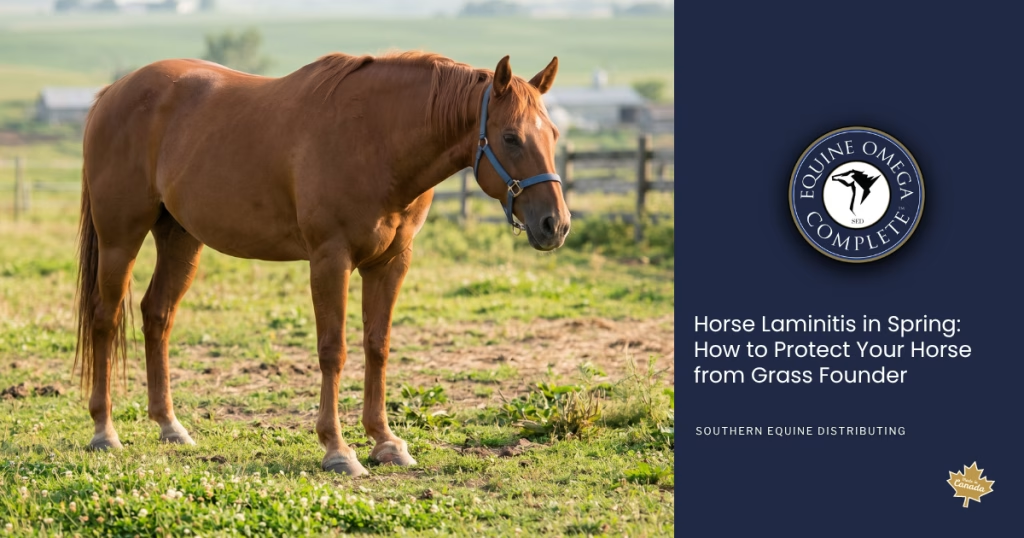
Laminitis in horses is a painful inflammation of the sensitive laminar tissue inside the hoof, and spring is when it strikes hardest. The window between “fine” and “foundered” can be as short as 48 hours. Here is how to recognise the risk before it reaches your horse, and what management steps and supplements actually make a difference.
What Is Horse Laminitis?
Laminitis is the inflammation and breakdown of the laminae, the soft connective tissue that bonds a horse’s coffin bone to the inner hoof wall. When that tissue is compromised, blood flow inside the hoof is restricted, the laminae weaken, and the coffin bone can shift or rotate away from the hoof wall. The Western College of Veterinary Medicine (WCVM) at the University of Saskatchewan describes this rotation as a painful, often irreversible process that causes severe lameness and, in serious cases, leads to euthanasia.
Laminitis and founder are terms often used interchangeably, but they describe two stages of the same disease: laminitis is the acute inflammatory event, while founder is the permanent structural rotation that follows a severe or repeated episode.
Horse Laminitis Information
- Spring grass is the number one dietary trigger for laminitis. Cool-season grasses accumulate nonstructural carbohydrates (sugars and fructans) that spike blood insulin levels and cut off blood flow to the hoof.
- High-risk horses need pasture restrictions before the grass flush arrives. Horses with Equine Metabolic Syndrome, PPID, or a body condition score above 6 are most vulnerable.
- Early warning signs appear well before visible lameness. A strong digital pulse, heat in the hoof wall, and a weight-shifted stance are signals to act on immediately.
- Timed turnout, dry lots, and grazing muzzles are your first line of defence. Limiting access during peak sugar hours (10am–4pm) reduces risk dramatically.
- Targeted supplements support insulin regulation year-round. Magnesium, chromium, and low-NSC feed formulas are meaningful tools for metabolically susceptible horses.
Why Spring Grass Triggers Laminitis
Spring pasture looks healthy, and for a metabolically sound horse, it mostly is. For susceptible animals, though, the chemistry of early-season grass is a real problem.
1. Nonstructural Carbohydrates Spike After Winter Dormancy
Cool-season grasses such as fescue, bluegrass, and ryegrass store energy as nonstructural carbohydrates (NSC): simple sugars, starch, and fructans. During rapid spring growth, these plants push NSC into the leaf tips where horses graze. Levels can run two to three times higher than in mature summer pasture.
The WCVM Veterinary Medical Centre notes that spring and early fall after the first frost are particularly risky times for EMS horses on pasture because the grass is much richer in carbohydrates during those periods.
2. Insulin Surges Restrict Blood Flow to the Hoof
When an insulin-resistant horse eats a high-NSC meal, blood insulin rises sharply. Research confirms that hyperinsulinaemia (chronically elevated insulin) is the primary driver of pasture-associated laminitis. Excess insulin triggers vasoconstriction in the digital vessels of the hoof, cutting off the blood supply the laminae depend on. Without adequate circulation, the tissue begins to die and the coffin bone loses its structural anchor.
3. The Risk Window Is Longer in Southern Climates
Horses in warmer Canadian regions face an extended spring risk period. Milder winters let grass green up earlier, and the NSC flush can stretch from late February through May. That gives owners less margin for error than those in harsher climates where spring arrives late and short.
Which Horses Are Most at Risk
Not every horse faces the same level of danger. Knowing your horse’s individual profile determines how aggressively you need to manage spring pasture access.
| Risk Factor | Examples | Spring Risk Level |
| Equine Metabolic Syndrome (EMS) | Overweight horses, “easy keepers” | Very High |
| PPID (Cushing’s Disease) | Older horses, delayed shedding, pot belly | Very High |
| Native and Pony Breeds | Welsh, Shetland, Haflinger, Miniature | High |
| Prior Laminitis History | Any horse that has foundered before | High |
| Overweight, No Metabolic Diagnosis | Cresty neck, body condition score 7+ | Moderate–High |
| Healthy, Fit Performance Horse | Hard keepers, conditioned athletes | Low |
The WCVM notes that EMS tends to develop in horses and ponies from hardier breeds (Morgans, Quarter Horses, Arabians, Tennessee Walking Horses) whose ancestors evolved on very little nutrition. These animals gain weight easily and are often described as easy keepers.
How to Recognise Laminitis Early
The classic stiff, “walking on eggshells” gait is a late-stage sign. Look for these earlier signals instead.
The Bounding Digital Pulse
Place two fingers just above the fetlock, in the groove on either side of the flexor tendons. A strong, pounding pulse, rather than the barely-perceptible normal pulse, points to inflammation inside the hoof. Check all four feet and compare. A pronounced pulse in the front feet is especially significant.
Heat Along the Hoof Wall
Run your palm from the coronary band to the toe. Abnormal warmth in one or more hooves, especially when paired with an elevated digital pulse, is an early warning. Some warmth after exercise is normal; heat in a resting horse is not.
Rocked-Back Stance and Weight Shifting
A horse in early laminitic pain often leans back onto its hindquarters to relieve pressure on the front hooves. You may also notice repeated weight shifting, or reluctance to walk across hard ground. These behaviours get written off as laziness. Do not write them off in spring.
The Spring Laminitis Prevention Protocol
Start before symptoms appear, ideally by late February or early March.
Framework: Spring Pasture Transition Management
Step 1: Restrict Pasture Before the Grass Flush
Move high-risk horses to a dry lot or sacrifice paddock when active spring growth begins. Do not wait for the pasture to look lush; by that point, NSC levels are already peaking. A susceptible horse can consume a dangerous fructan load in under two hours of unmanaged grazing.
Step 2: Time Turnout to Low-Sugar Windows
If complete pasture restriction is not possible, limit grazing to early morning before 10am. Grasses photosynthesise and accumulate NSCs throughout the day, peaking in the afternoon. After a frosty night, wait until the grass has fully warmed before turning horses out; frost-stressed grass produces even higher fructan concentrations. High-risk horses should not be on sunny afternoon pasture.
Step 3: Use a Grazing Muzzle Correctly
Grazing muzzles reduce grass intake by roughly 75–80% without removing a horse’s ability to move and socialise. Introduce the muzzle gradually over one to two weeks before the high-risk period. Check the fit regularly: you should be able to slip one finger between the muzzle and the chin. Always make sure the horse has free access to water while muzzled.
Step 4: Manage Hay During Restricted Periods
When horses are off pasture, replace calories with tested low-NSC hay (below 10% NSC on a dry matter basis). Soaking hay for 30–60 minutes in cold water reduces soluble sugar content further. As WCVM notes, this step helps reduce sugar in the hay and can improve the painful symptoms of laminitis in horses already affected. Soaking also leaches minerals, so a targeted mineral supplement becomes more important during this period.
Step 5: Support Metabolic Health With Targeted Supplements
Diet and management alone are often not enough for horses with EMS or PPID. A targeted supplement programme can help regulate insulin response and support hoof tissue integrity through the spring transition.
Magnesium plays a central role in insulin sensitivity. Many horses on high-iron forage are magnesium-deficient, as iron blocks magnesium absorption. Supplementing with magnesium oxide or magnesium aspartate (1,000–2,500 mg/day depending on body weight) has been shown to support improved insulin sensitivity in at-risk horses.
Chromium works alongside magnesium to support glucose metabolism. Organic chromium (chromium yeast or chromium picolinate) at 5–10 mg/day is well tolerated and commonly included in laminitis-prevention protocols.
Jiaogulan (Gynostemma pentaphyllum) is an herb used to support peripheral circulation in laminitis-prone horses. It encourages nitric oxide production, which helps maintain healthy blood flow to the digital vessels, the same pathway disrupted in laminitis.
Biotin and Zinc support hoof wall integrity and laminar regrowth. For horses prone to laminitis, a hoof-specific supplement containing at least 20 mg biotin alongside zinc and methionine provides the building blocks for stronger laminae over time.
Southern Equine carries metabolic support supplements and low-NSC feed formulas suited to insulin-resistant horses and ponies. Reach out to our team for a recommendation tailored to your horse’s risk profile.
What to Do If You Suspect Laminitis
If you observe an elevated digital pulse, hoof heat, reluctance to move, or any change in stance or gait, move quickly:
- Remove the horse from pasture immediately. Move to a dry lot or stall bedded deeply with shavings or sand.
- Call your veterinarian. Do not wait to see whether symptoms resolve. Early anti-inflammatory treatment and supportive management can prevent coffin bone rotation.
- Do not force the horse to walk. Movement during an acute laminitic episode tears the already-compromised laminae further.
- Apply cold therapy promptly. WCVM research confirms that cryotherapy (standing in cold water or using ice boots) is one of the few treatments shown to reduce laminitic damage, and it works best when started within the first 24 to 72 hours of an episode.
- Arrange a farrier assessment. Radiographs are often needed to evaluate the degree of rotation and guide therapeutic trimming or supportive shoeing decisions.
Common Mistakes That Lead to Crisis
Waiting for visible lameness before acting is the most dangerous mistake in laminitis management.
By the time a horse limps noticeably, the laminar tissue has been under attack for hours. Here are the other errors that most commonly result in serious, avoidable damage.
1. Believing “A Little Grass Won’t Hurt”
For an insulin-resistant horse, there is no safe amount of unmanaged spring grazing. Even a short session on lush pasture can trigger enough of an insulin spike to start laminar inflammation. The concept of “just a little” does not apply to metabolically compromised horses during the spring flush.
2. Skipping a Spring Body Condition Assessment
Owners who see their horses daily often adjust gradually to subtle weight gain. Get an objective body condition score (BCS) each spring, ideally from someone who does not see the horse regularly. WCVM guidelines put the management goal at a BCS below 7 (ideally 5) on the standard 1–9 scale. Any horse at BCS 7 or above should be treated as high-risk for spring laminitis.
3. Ignoring the 24–48 Hour Delay
Pasture-associated laminitis often develops a full day or two after the high-NSC grazing event. A horse that seems bright and sound on Sunday morning after weekend pasture access may be showing digital pulse changes by Monday night. Check pulses regularly so you know each horse’s baseline.
4. Overlooking PPID in Older Horses
Pituitary Pars Intermedia Dysfunction (Cushing’s Disease) is far more prevalent in horses over 15 than many owners realise. PPID disrupts insulin regulation and increases laminitis risk year-round, but especially in spring when NSC levels in grass are highest. Spring is a good time to have older horses tested and, if warranted, started on pergolide therapy before the grass flush arrives.
Frequently Asked Questions
What causes laminitis in horses during spring?
Spring laminitis is primarily caused by high levels of nonstructural carbohydrates (fructans and simple sugars) in rapidly growing cool-season grasses. When horses with insulin resistance or Equine Metabolic Syndrome consume these carbohydrates, blood insulin surges and restricts blood flow to the sensitive laminae inside the hoof, triggering inflammation and potential structural damage to the coffin bone.
How quickly can spring grass cause laminitis in horses?
Laminitis can develop within 24–48 hours of a high-NSC grazing event. A horse that grazes freely on spring pasture one afternoon may show early digital pulse changes the following morning, with visible lameness appearing within another 12–24 hours. This rapid progression is why prevention must begin before symptoms appear, not in response to them.
Which horse breeds are most susceptible to laminitis?
Ponies and native breeds (Welsh, Shetland, Miniature, Dartmoor, Haflinger) carry the highest inherent risk. Among horse breeds, Morgans, Arabians, Quarter Horses, and Tennessee Walking Horses with easy-keeper metabolisms are frequently affected. As the WCVM explains, these breeds evolved from ancestors that survived on very little nutrition, making their metabolism poorly suited to today’s carbohydrate-rich diets.
Can a horse that has foundered return to normal life?
Many horses with a laminitis history return to managed pasture and a comfortable quality of life with the right long-term approach. Recovery depends on the severity of rotation, early intervention, consistent hoof care, and ongoing dietary management. Some severely affected horses do best on permanent dry lot management, but a great deal depends on how quickly the initial episode was treated.
Do supplements actually help prevent laminitis?
Supplements are not a substitute for management changes like pasture restriction, but they can meaningfully support at-risk horses. Magnesium has the strongest evidence base for improving insulin sensitivity in EMS horses. Chromium, jiaogulan, and hoof-specific biotin and zinc supplements all have supportive research behind them. They work best as part of a complete management plan, not in place of one.
What is the difference between laminitis and founder in horses?
Laminitis refers to the acute inflammatory phase: the initial episode of inflammation triggered by an insulin surge, infection, or another cause. Founder specifically refers to the chronic structural consequence: the rotation or sinking of the coffin bone within the hoof capsule following laminar failure. A horse can experience laminitis without foundering if the episode is caught and treated quickly enough.
When should I call a vet for suspected horse laminitis?
Contact your veterinarian at the first sign of an abnormal digital pulse or unexplained hoof heat. Do not wait for visible lameness. Early veterinary intervention with anti-inflammatories, cold therapy, and supportive trimming dramatically improves long-term outcomes. Horses whose treatment is delayed by even 24 hours face longer, more difficult recoveries and a greater risk of permanent structural damage.
Action Steps for Spring Laminitis Prevention
- Check digital pulses weekly starting in late February: Know your horse’s normal baseline so any change registers immediately
- Score body condition in late winter: Any horse at BCS 6 or above should have pasture restricted before the grass flush
- Set up a dry lot or sacrifice paddock now: Have the space ready before you need it; spring grass does not wait
- Source tested low-NSC hay: Stock it before restricting pasture so you are never caught short
- Talk to your vet about metabolic testing this spring: Older horses and easy keepers benefit from insulin and ACTH panels before the high-risk season begins
- Review your supplement programme: Metabolic horses often need magnesium, chromium, and hoof-support nutrients ramped up before spring turnout
Bottom line: Horse laminitis in spring is driven by the surge of nonstructural carbohydrates in early-season grass triggering an insulin response that restricts blood flow to the hoof, and it is almost entirely preventable with smart pasture management, appropriate supplementation, and early identification of the horses most at risk.