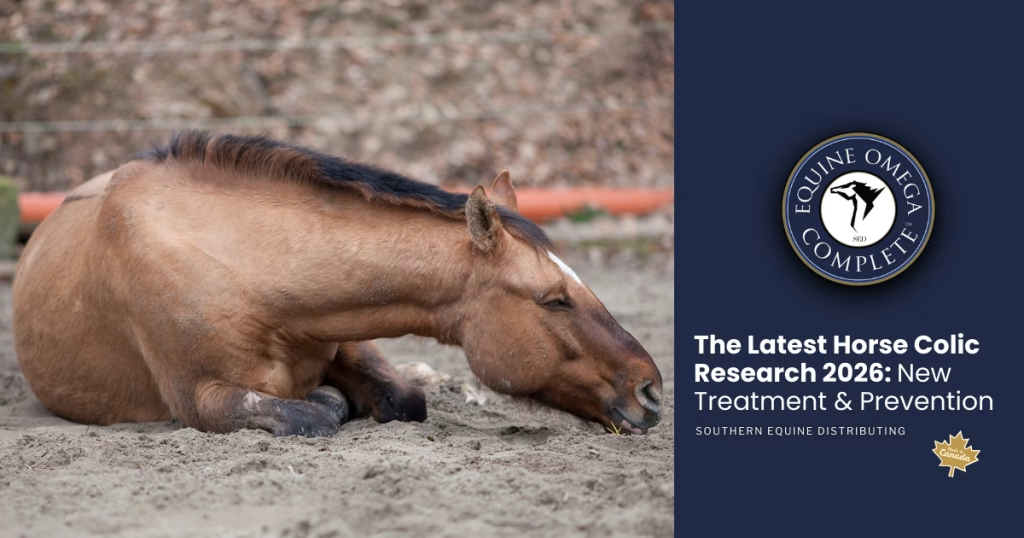
Horse colic surgery now achieves 75-95% survival rates in 2025-2026, up from 50-60% historically, driven by minimally invasive laparoscopic techniques, intravenous lidocaine protocols to prevent post-operative ileus, and carboxymethylcellulose (CMC) application to reduce adhesions.
The most significant advances focus on preventing post-operative complications, reducing anesthesia risk through standing surgery, and enabling earlier intervention through portable diagnostic technology. Approximately 4-10% of horses will experience at least one colic episode during their lifetime, with prevention through evidence-based management remaining more effective and cost-efficient than treatment.
What is Equine Colic?
Colic is the most frequently cited health concern among horse owners and veterinarians according to surveys by Morris Animal Foundation and the American Association of Equine Practitioners (AAEP). The term “colic” describes abdominal pain in horses and encompasses multiple gastrointestinal and extragastrointestinal causes including impactions (the most common type), displacements, torsions, inflammation, and parasitic infections.
Approximately 4-10% of horses will experience colic in their lifetime, with 10-15% of cases requiring surgical intervention. Early recognition and rapid referral are the strongest predictors of successful outcomes, as most severe colics begin as mild episodes that escalate due to delayed treatment.
Recent data from equine veterinary networks indicate seasonal variation in colic incidence, with late September peaks and winter months showing elevated risk due to reduced water intake and reliance on dry forage.
Latest Surgical Treatment Innovations (2025-2026)
Minimally Invasive Standing Laparoscopy
Standing laparoscopic surgery represents a paradigm shift in equine colic treatment by eliminating the risks associated with general anesthesia – a significant source of post-operative complications. This technique uses carbon dioxide insufflation and small incisions through which surgeons manipulate instruments under direct visualization.
Key benefits of laparoscopic intervention:
- Near-elimination of anesthesia-related injury risk (horses remain standing under sedation rather than requiring intubation)
- Shorter recovery times compared to traditional surgery
- Reduced post-operative inflammation
- Particularly effective for nephrosplenic entrapment (left dorsal colon displacement) and adhesional colic
Limitations: Applicability is limited to specific lesion types; severe cases involving intestinal resection still require traditional exploratory celiotomy.
Improved Celiotomy Outcomes
Recent research spanning 2018-2023 documents a 5-year evolution in surgical technique and lesion management. Modern exploratory celiotomy now achieves short-term survival rates of 68-100% depending on lesion severity, with overall survival to discharge reaching approximately 73.5%. Long-term survival (beyond 180 days) varies by intervention type but averages 60-75% when appropriate post-operative protocols are followed.
Surgical Colic Survival Rates by Intervention Type
| Intervention Type | Short-Term Survival | Long-Term Survival (180+ days) | Primary Benefits |
|---|---|---|---|
| Standing Laparoscopy | 95%+ | 85-90% | No anesthesia risk, faster recovery |
| Standard Celiotomy (no complications) | 85-100% | 75-85% | Proven technique, broad applicability |
| Celiotomy with CMC Application | 75% at 8 weeks | 75% at 180 days | 10x improvement in long-term survival |
| Celiotomy without CMC | 75% at 8 days | Data shows significant decline | Higher adhesion risk |
Critical Factor: Each hour of delay in referral decreases survival probability, as endotoxemia from intestinal compromise becomes increasingly difficult to manage.
Pharmaceutical Advances in Colic Treatment
Preventing Post-Operative Ileus with Lidocaine
Intravenous lidocaine infusion represents one of the most significant recent discoveries in post-operative colic management. Continuous lidocaine infusion demonstrably reduces postoperative ileus – the inability of intestines to properly propel contents, a leading cause of post-operative mortality.
Mechanism of Action:
- Works through anti-inflammatory effects rather than nerve suppression
- Prevents white blood cell infiltration into the intestinal wall
- Preserves normal motility and reduces the inflammatory cascade that paralyzes bowel function
- Counteracts the deleterious effects of flunixin meglumine (a common NSAID), which studies show can delay intestinal repair despite providing pain relief
COX-2 Selective Inhibitors
Contemporary research has identified a critical trade-off with traditional NSAIDs: while they effectively manage pain and endotoxic shock by blocking prostaglandin production, they simultaneously impair intestinal repair by inhibiting the “good” prostaglandins necessary for gut barrier function.
Available COX-2 Selective Inhibitors:
| Medication | Brand Name | Availability | Formulation | Intestinal Repair Performance |
|---|---|---|---|---|
| Firocoxib | Equioxx | United States | Oral (IV development ongoing) | Good preservation of COX-1 prostaglandins |
| Meloxicam | Metacam | European Union & surrounding countries | IV and oral available | Superior intestinal repair vs. flunixin |
COX-2 selective inhibitors target only pro-inflammatory prostaglandin synthesis while preserving COX-1 derived healing prostaglandins, providing effective pain control without compromising gut healing.
Adhesion Prevention Through Carboxymethylcellulose
Adhesions – abnormal scar tissue binding intestinal loops together – are the leading cause of long-term colic recurrence and death following surgery, typically manifesting 4-8 weeks post-operatively.
Carboxymethylcellulose (CMC) Application:
- Applied as a 1% polysaccharide gel directly to intestines during surgery
- Prevents white blood cell accumulation on serosal surfaces
- Dramatically reduces adhesion formation
Landmark Research Findings:
- Horses receiving 1% CMC application achieved 75% survival to 180 days post-operatively
- Horses without CMC treatment showed only 75% survival to 8 days
- This represents a tenfold improvement in long-term outcome
- CMC application now represents standard of care in high-quality surgical centers
Endotoxin Binding and Immune Modulation
Polymixin – an antibiotic previously avoided due to disruption of normal flora – can be safely used at low doses to bind circulating endotoxin without causing diarrhea. Application is most effective intraoperatively when endotoxin release from manipulated strangulated bowel is anticipated.
Note: Specific anti-endotoxin therapies (immunized antibodies) have proven ineffective once the immune cascade initiates.
Diagnostic Technology and Prognostication
Emerging Detection and Monitoring Systems
The 2025 literature increasingly documents wearable biosensors and camera monitoring systems that enable real-time detection of colic signs during unsupervised periods (overnight, pasture grazing). These systems track vital parameters and behavioral changes associated with early colic, potentially reducing the diagnostic delay that currently characterizes many referrals.
Advanced Imaging and Fluid Analysis
Portable Diagnostic Tools:
- Abdominal ultrasonography: Increasingly accessible for ambulatory practice, with portable equipment enabling field diagnosis of distended bowel loops and other structural abnormalities
- L-lactate meters: Provide stall-side indicators of systemic inflammation
- Serum amyloid A meters: Indicate need for referral based on inflammation markers
Innovative Research (Morris Animal Foundation-Funded):
Morris Animal Foundation has funded pilot research into peritoneal fluid proteomics – analyzing the complete protein profile of abdominal fluid to identify specific markers distinguishing strangulating from non-strangulating disease and predicting post-operative complications. This research aims to develop an objective stall-side prognostic test, potentially transforming treatment decision-making by identifying high-risk cases earlier.
Research Note: Recent analysis of alactic base excess (ABE) as a prognostic marker found it neither sensitive nor specific for predicting colic outcomes in horses, despite showing association with human outcomes – highlighting the importance of species-specific research.
Evidence-Based Colic Prevention Strategies
Dietary Management
Evidence strongly supports forage-based diets providing minimum 60% of total caloric intake as the cornerstone of colic prevention.
Best Practices:
| Strategy | Recommendation | Rationale |
|---|---|---|
| Forage intake | Minimum 60% of total calories | Maintains gut motility, provides fiber |
| Concentrate feeds | Limit to 2-3 small meals daily | Prevents fermentative gas accumulation |
| Dietary transitions | Gradual change over 7-14 days | Allows hindgut microbiota adaptation |
| Alternative energy sources | Fats and oils vs. grain | Safer for predisposed horses |
Research on high-grain diets and recurrent colic reveals that while direct causative links remain unproven, practitioners commonly recommend minimizing concentrates in predisposed horses.
Water and Hydration
Consistent access to clean water is non-negotiable for colic prevention. Horses experiencing even 1-2 hours of water deprivation show significantly elevated colic risk.
Winter Management Strategies:
- Install heated waterers to prevent freezing
- Break ice frequently (minimum 2-3 times daily)
- Monitor water intake to ensure adequate hydration (average horse drinks 5-10 gallons daily)
- Provide warm water to encourage drinking in cold weather
Winter represents a particular challenge, as freezing reduces water availability and reduced water intake is compounded by reliance on dry hay.
Exercise, Turnout, and Behavioural Management
Turnout Benefits:
- Increased turnout combined with movement improves gastrointestinal motility
- Reduces gas accumulation through natural movement
- Decreases stress-related colic risk
Horses confined to stalls without exercise show elevated colic risk, particularly if stall transitions or routine changes occur abruptly.
Research Finding: Research from the University of Liverpool identified that horses exhibiting stereotypies (repetitive behaviors like cribbing or weaving) show elevated recurrent colic risk – though causation versus correlation remains under investigation. Research is here.
Deworming and Dental Care
Modern Parasite Control:
- Strategic deworming based on fecal egg count testing rather than routine blanket treatment
- Reduces anthelmintic resistance while maintaining efficacy
- Fecal testing 1-2 times annually to stratify horses into shedder categories
- Targeted treatment protocols based on individual parasite burden
Dental Examinations:
- Every 6-12 months to ensure adequate mastication
- Prevents feed impaction from poorly chewed hay or grain
- Poor dentition increases impaction risk substantially and should be addressed before other dietary interventions
Probiotics and Digestive Supplements
The evidence base for probiotics in colic prevention remains limited and contradictory.
Research Findings:
- Some studies demonstrate improved intestinal health markers with multispecies fermented probiotics
- Particular benefit in reducing pathogenic bacteria (E. coli, Clostridium perfringens) and improving fecal pH
- Direct linkage to reduced colic incidence is not established
EquiNectar Study (BEVA Colic Symposium):
- 82% of treated horses demonstrated improvement
- 47% achieved complete clinical resolution
- Note: Horses were not exclusively colic cases and had often failed conventional treatments
- Limited clinical trial data warrants cautious interpretation
Kentucky Equine Research Caution: Horses with prior colic tendencies may receive probiotics, and any apparent increased colic rates may reflect treatment of a pre-existing susceptibility rather than probiotic harm – association does not equal causation.
Emerging Research Areas and Future Directions
Transport-Associated Colic Prevention
Morris Animal Foundation is funding research into risk factors for post-transit colic, recognizing that horses are among the most-transported species globally but frequently develop colic within 24-72 hours of transport. Findings from this collaboration with equine transport services may yield specific recommendations for pre-transport management, hydration protocols, and transport duration optimization.
Educational Interventions for Working Equids
In recognition of profound differences in colic outcomes between developed and low-income regions, Morris Animal Foundation is funding co-development of educational resources for working equids in South America. This research addresses knowledge gaps around clinical signs, risk factors, and treatment options, acknowledging that animal welfare and owner livelihood are inseparably linked in these populations.
Inflammatory Mechanisms and Postoperative Complications
Ongoing funded research targets inflammation and its role in postoperative ileus, hypothesizing that targeted anti-inflammatory interventions could prevent this life-threatening complication. Understanding whether inflammation drives POI or results from it may unlock novel prevention strategies.
Standardization of Acute Colitis Diagnosis
A global consensus development project is underway to establish unified diagnostic criteria for acute colitis in horses, recognizing that current diagnostic inconsistency impairs clinical trial quality and research advancement. This initiative involves interviews with leading specialists, global practitioner surveys, and consensus meetings to establish evidence-based definitions.
Frequently Asked Questions About Horse Colic
Q: What is the survival rate for horse colic surgery in 2025?
A: Horse colic surgery achieves 75-95% short-term survival rates in 2025, with long-term survival (beyond 180 days) averaging 60-75% when modern protocols are followed. Standing laparoscopic surgery shows the highest success rates at 95%+ for appropriate cases. Survival rates improve dramatically when horses receive intravenous lidocaine infusions post-operatively and when surgeons apply carboxymethylcellulose (CMC) during the procedure to prevent adhesions.
Q: How can I prevent colic in my horse?
A: Prevent colic by providing minimum 60% forage-based diet, ensuring constant access to clean water (horses need 5-10 gallons daily), maximizing turnout and exercise, performing dental exams every 6-12 months, and using strategic deworming based on fecal egg counts. Avoid sudden dietary changes, limit concentrate feeds to small meals, and never allow water deprivation even for 1-2 hours. Winter requires special attention with heated waterers and frequent ice breaking.
Q: What are the early signs of colic in horses?
A: Early colic signs include pawing at the ground, looking or biting at the abdomen, repeated lying down and standing up, reduced appetite, decreased manure production, and mild restlessness. Horses may also stretch as if to urinate without producing urine, roll more frequently than normal, or show general discomfort. Contact your veterinarian immediately if you observe these signs, as early intervention is the strongest predictor of successful outcomes.
Q: When should I call the vet for horse colic?
A: Call your veterinarian immediately when you observe any colic signs, as each hour of delay decreases survival probability. Do not wait to see if symptoms resolve on their own. Most severe colics begin as mild episodes that escalate due to delayed treatment. Early recognition and rapid veterinary contact are the strongest predictors of successful outcomes, with modern research showing that prepared readiness for surgical referral is the most effective “treatment” for severe colic.
Q: What causes colic in horses?
A: Colic has multiple causes including feed impactions (most common), intestinal displacements, torsions (twisting), gas accumulation, inflammation, and parasitic infections. Risk factors include reduced water intake, high-concentrate diets, sudden dietary changes, limited exercise and turnout, poor dental health preventing proper chewing, inadequate parasite control, and stressful routine changes. Seasonal variation occurs with late September peaks and elevated winter risk due to cold weather reducing water consumption.
Q: Can horses fully recover from colic surgery?
A: Yes, horses can fully recover from colic surgery with modern techniques achieving 60-75% long-term survival beyond 180 days. Recovery depends on the type of lesion, speed of intervention, and post-operative protocols used. Horses receiving CMC application during surgery show 75% survival at 180 days versus only 75% survival at 8 days without CMC – a tenfold improvement. Standing laparoscopic surgery for appropriate cases shows 85-90% long-term survival with faster recovery times than traditional celiotomy.
Q: What is the best treatment for horse colic?
A: The best colic treatment depends on the cause and severity. Mild impaction colics often resolve with medical management including intravenous fluids, pain medication (preferably COX-2 selective inhibitors like Equioxx or Metacam), and enteral fluids administered via nasogastric tube. Severe cases require surgery, with standing laparoscopic techniques preferred for displacements and traditional celiotomy necessary for strangulations or resections. Post-operative protocols should include intravenous lidocaine infusion to prevent ileus and CMC application to reduce adhesions.
Q: How long does recovery from colic surgery take?
A: Recovery from standing laparoscopic colic surgery typically takes 2-4 weeks with shorter hospital stays and faster return to normal activity. Traditional celiotomy recovery requires 4-8 weeks of careful monitoring, with initial hospital stays of 5-10 days depending on complications. Long-term survival assessments at 180 days show that horses receiving modern post-operative protocols (lidocaine infusion, COX-2 inhibitors, CMC application) achieve significantly better outcomes. Adhesion-related complications typically manifest 4-8 weeks post-operatively if they occur.
Q: Do probiotics help prevent colic in horses?
A: Evidence for probiotics in colic prevention remains limited and contradictory. Some studies show improved intestinal health markers with multispecies fermented probiotics, particularly reducing pathogenic bacteria like E. coli and Clostridium perfringens. However, direct linkage to reduced colic incidence is not established. Kentucky Equine Research cautions that association does not equal causation – horses receiving probiotics may have pre-existing colic susceptibility. Current consensus recommends prioritizing foundational management (diet, water, exercise, dental care) before adding supplements.
Q: What is post-operative ileus and how is it prevented?
A: Post-operative ileus (POI) is the inability of intestines to properly propel contents following surgery, representing a leading cause of post-operative mortality in colic cases. POI is prevented through continuous intravenous lidocaine infusion, which works by preventing white blood cell infiltration into the intestinal wall rather than through nerve suppression.
Research shows lidocaine preserves normal motility and counteracts the deleterious effects of traditional NSAIDs like flunixin meglumine. Using COX-2 selective inhibitors instead of traditional NSAIDs also improves intestinal healing while maintaining pain control.
Key Takeaways: Horse Colic Research 2025-2026
- Survival rates improved dramatically: Modern surgical techniques achieve 75-95% short-term survival, up from 50-60% historically, with long-term survival averaging 60-75% when proper protocols are followed
- Standing laparoscopy eliminates anesthesia risk: Minimally invasive standing surgery achieves 95%+ success rates for appropriate cases by keeping horses sedated rather than under general anesthesia
- Lidocaine infusion prevents deadly complications: Continuous intravenous lidocaine post-operatively reduces post-operative ileus by preventing intestinal inflammation through white blood cell inhibition
- CMC application provides tenfold improvement: Carboxymethylcellulose gel applied during surgery increases 180-day survival to 75% versus 75% survival at only 8 days without CMC
- Early intervention is critical: Each hour of delay in referral decreases survival probability as endotoxemia becomes increasingly difficult to manage
- Prevention remains most effective: Evidence-based management (60%+ forage diet, constant water access, exercise, dental care, strategic deworming) prevents colic more reliably and cost-effectively than treatment
- COX-2 inhibitors superior to traditional NSAIDs: Equioxx (firocoxib) and Metacam (meloxicam) provide pain control while preserving intestinal healing, unlike flunixin meglumine which impairs gut repair
- Portable diagnostics enable earlier detection: Wearable biosensors, portable ultrasound, and stall-side L-lactate/serum amyloid A testing reduce diagnostic delays
- Winter requires heightened vigilance: Late September and winter months show elevated colic risk due to reduced water intake and dry forage reliance
- Probiotic evidence remains limited: While some studies show intestinal health benefits, direct proof of colic prevention is lacking; prioritize foundational management first
*Equine Ctar – Winter Colic and Cold Weather Effects (2025, November) URL:
*TheHorse – Feeding Guidelines for Horses With Recurrent Colic URL:
*Arenus – Severe Colic and New Treatments URL:
*Chiavaccini L – Editorial: Advancements in Equine Pain Management. PMC URL: