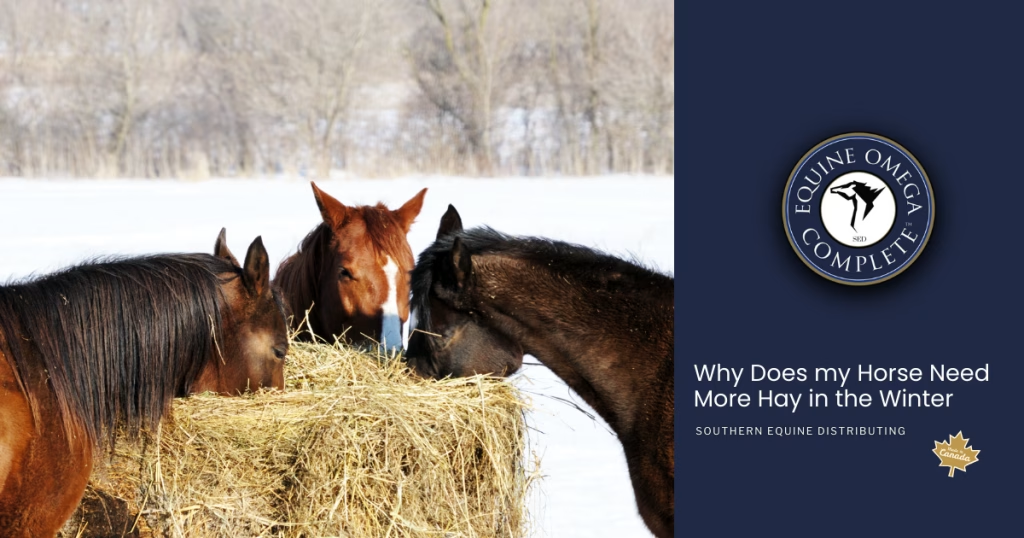
As temperatures drop across Canada, from the damp cold of BC to the deep freezes in the Prairies, your horse’s nutritional needs shift dramatically. The short answer is simple: hay is your horse’s internal furnace.
Unlike humans, who rely on external heat or carbohydrate-rich comfort foods to stay warm, horses rely on the fermentation of fibre in their hindgut. This biological process generates significant internal body heat, making hay the single most critical factor in winter survival and weight maintenance.
The “Internal Furnace”: How Hay Digestion Generates Heat
The mechanism behind your horse’s winter warmth is hindgut fermentation. When a horse consumes long-stem forage (hay), it passes into the cecum and large colon, where billions of microbes break down the fibrous plant material. This microbial breakdown is exothermic, meaning it produces heat as a byproduct.
The Role of Fibre in Thermoregulation
In a Canadian winter, fibre is not just a nutrient; it is a fuel source for thermoregulation. Grain (corn, oats, barley) is digested primarily in the small intestine by enzymes, a process that produces very little body heat. Conversely, the slow fermentation of hay keeps the “furnace” burning for hours after a meal.
- Continuous Heat: Digestion of fibre takes longer than grain, providing a steady release of internal warmth.
- Gut Motility: High-fibre diets maintain gut movement, reducing the risk of impaction colic, which is common when horses drink less water in freezing temperatures.
- Mental Health: Chewing hay mimics natural grazing behaviour, reducing stall vices and stress during long winter nights.
> Commercial Insight: While hay provides the heat, it doesn’t always provide enough calories for hard keepers. To bridge the gap without feeding high-sugar grains, Equine Omega Complete adds concentrated, cool calories from human-grade soy and fish oils, helping your horse hold weight safely even when the thermometer hits -30°C.
Calculating Winter Rations: Quantity and Calories
A common mistake is feeding the same amount of hay in January as in July. In Canada, once the temperature drops below a horse’s Lower Critical Temperature (LCT) – typically around -15°C for a healthy, winter-adapted adult horse – their metabolic rate increases to maintain core body temperature.
The 2.5% Rule
For every degree Celsius below the LCT, a horse’s energy requirement increases by approximately 2.5%.
- Baseline: A 500 kg (1,100 lb) horse typically requires 2% to 2.5% of their body weight in hay daily. This equals 10–12.5 kg (22–28 lbs) of hay per day.
- Deep Freeze Adjustment: If the temperature drops to -25°C (10 degrees below LCT), your horse may need 20–25% more feed just to stay warm.
Signs You Are Underfeeding
- Weight Loss: Visible ribs or a “tucked up” appearance, often hidden under a thick winter coat (always palpate your horse to check).
- Shivering: This is an emergency response; the horse is burning muscle glycogen to generate heat because their dietary fuel has run out.
- Eating Bedding: A horse starved of fibre may eat straw bedding or chew wood to satisfy the drive for roughage.
Hay Selection and Economics in Canada
Not all hay is created equal when it comes to generating heat. The best hay for winter is one that balances caloric density with digestibility.
Best Hay Types for Cold Climates
- Grass Hay (Timothy/Brome/Orchard): The gold standard for winter feeding. It has high fibre content, which maximizes fermentation and heat production.
- Alfalfa Mix: Excellent for boosting overall calorie intake due to higher protein and energy levels, but it produces slightly less “fermentation heat” per calorie than grass hay. A 70/30 Grass/Alfalfa mix is often ideal for Canadian winters.
- Straw: While high in fibre, it has very low nutritional value and can cause impaction if fed in large quantities. It should be used for bedding or strictly as a “slow feeder” filler, not a primary heat source.
The Cost of Winter Hay (2024-2025 Market)
Hay prices in Canada vary wildly by region (e.g., lower in the Prairies, higher in BC and Ontario) and weather conditions during the growing season.
- Small Square Bales: Expect to pay between $8.00 and $15.00 CAD per bale depending on quality and location.
- Round Bales: More economical for herd feeding, ranging from $100 to $200 CAD per bale.
- Daily Cost: Feeding a single horse through a 6-month Canadian winter can cost $1,500 to $2,500 CAD in hay alone.
> Commercial Insight: With hay prices soaring, wasted forage is money lost. By adding a liquid fat supplement like Equine Omega Complete, you can maximize the nutrient absorption of the hay you feed and ensure every calorie counts towards your horse’s health.
Executive Summary
- Heat Source: Hay is digested via hindgut fermentation, which acts as an internal furnace to keep horses warm.
- Quantity: Feed 2–2.5% of body weight daily. Increase rations by 2.5% for every degree below -15°C.
- Type: Grass hays (Timothy/Brome) are superior for heat generation; Alfalfa is better for raw calorie addition.
- Hydration: Water intake is critical; fermentation requires water. A dehydrated horse cannot digest hay efficiently.
- Supplementation: If a horse cannot eat enough hay to maintain weight, use high-fat supplements rather than heavy grain loads to avoid metabolic issues.
Frequently Asked Questions
Q: Can I replace hay with grain to keep my horse warm?
A: No. Grain is digested in the small intestine and produces very little body heat compared to the fermentation of hay in the hindgut. While grain adds calories, it does not act as an “internal heater” and can increase the risk of colic or ulcers if overfed.
Q: How do I know if my horse is cold?
A: The most obvious sign is shivering. However, check their ears and lower legs; if these are cold, the horse is diverting blood flow to the core. A horse that is huddled, lethargic, or losing weight despite normal feeding is likely struggling with the cold.
Q: Does snow count as water for horses in winter?
A: No. Eating snow requires the body to burn precious calories to melt it, which cools the horse down further. Horses must have access to clean, unfrozen water (ideally heated to 4°C–10°C) to ensure proper digestion and prevent impaction colic.
Q: Is alfalfa or timothy hay better for winter?
A: For generating body heat, Timothy (grass hay) is excellent because its higher fibre content promotes longer fermentation. Alfalfa provides more calories per pound, which helps with weight gain, but a mix of both often provides the best balance of heat generation and energy maintenance.
Q: Why is my horse losing weight even with free-choice hay?
A: Some horses, particularly seniors or thoroughbreds, may not be able to consume enough physical bulk to meet their caloric needs in extreme cold. In these cases, adding a dense fat source like Equine Omega Complete provides the missing energy without the bulk.